Horse Magnifier








ABOUT HORSE MAGNIFIER
Horse Magnifier is a visual puzzle game that challenges players to fix distorted horse images using movable circular lenses. Each level shows a stretched or broken horse silhouette, and players must place lenses in the correct positions to rebuild the correct shape. The game feels like solving an optical illusion instead of a traditional puzzle. Each level becomes more challenging as new distortions appear and more lenses are added. Play now and test your visual thinking and precision skills!
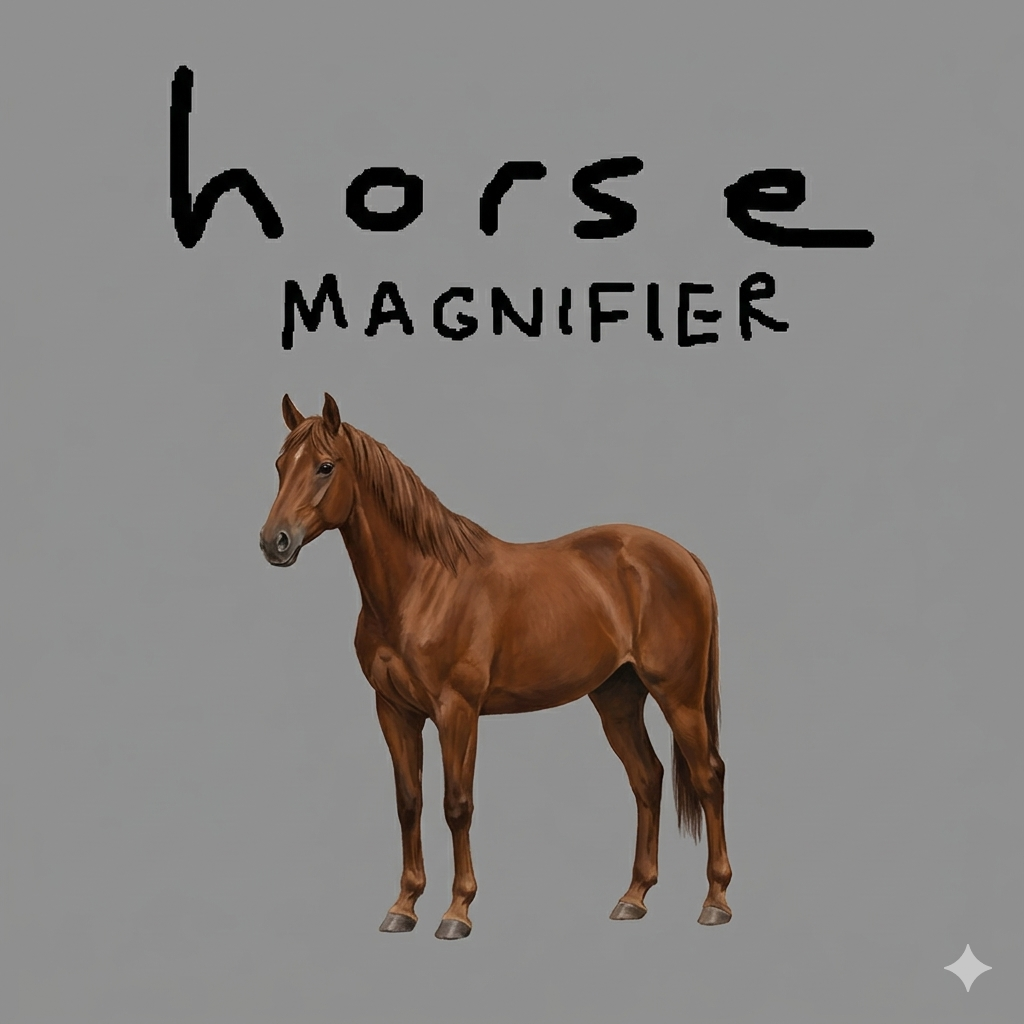 Horse Magnifier - A visual puzzle game
GAMEPLAY OVERVIEW
Lens Alignment And Shape Correction
Each level starts with a distorted horse image and one or more movable lenses. Players drag lenses across the image to change how the silhouette appears. The goal is to make the horse shape look correct and complete. Some areas may look stretched, broken, or misplaced, so players must experiment with lens positions. The puzzle is solved when the full horse silhouette matches the correct shape.
Observation And Spatial Thinking
Horse Magnifier focuses on visual perception and spatial reasoning. Players must compare body parts like the head, neck, legs, and body shape. Sometimes the body looks correct but the legs look wrong. Other times the head looks too large or too small. Players must carefully observe proportions and spacing. Small adjustments often work better than large movements.
Level Difficulty And Puzzle Variety
Early levels show simple horse shapes that are easy to recognize and fix. Later levels introduce strange distortions like stretched bodies, separated parts, curved shapes, or stylized figures. Some puzzles focus on body alignment, while others focus on face or leg positioning. The variety keeps the game interesting while the main gameplay stays simple and relaxing.
Controls Guide
- Mouse: Drag lenses to move them
- Left Click: Hold and move the lens
- Release Mouse: Place the lens
TIPS AND STRATEGIES
- Align the main body shape first
- Check the head and neck after fixing the body
- Compare the leg positions and spacing
- Look at the empty space around the shape
- Move lenses slowly for better accuracy
- Small adjustments usually work better than big movements
SIMILAR GAMES